
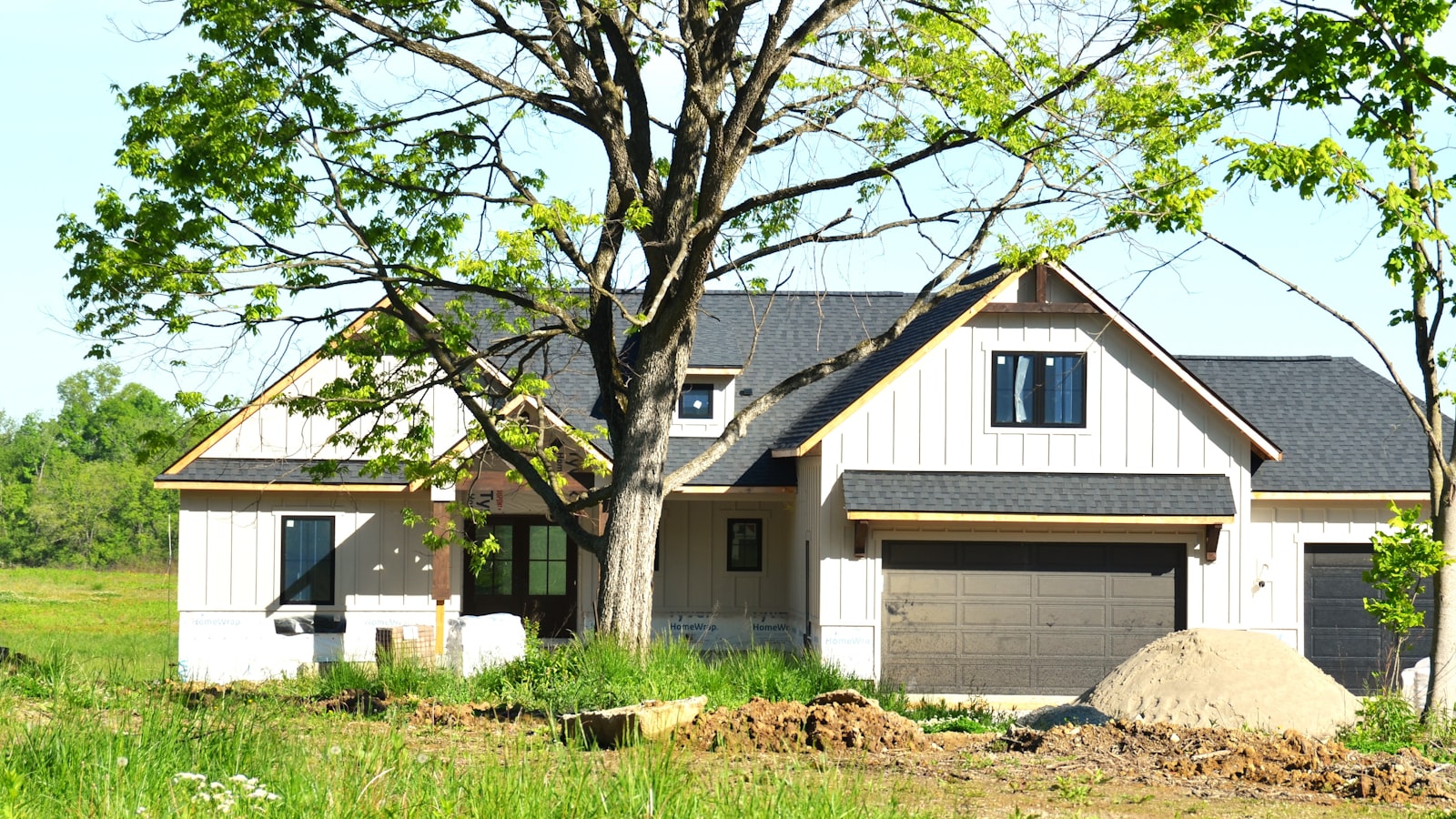
What a 9–14 Month Spokane Custom Home Build Actually Looks Like, Month by Month
Most families who call us have already decided they want to build. What they cannot pin down is the calendar. They have a lease with a notice period, a lender waiting on a start date, and a child who would rather not change schools in February. The question underneath every first conversation is the same one: when do we actually move in?
We tell people a Johnson Brothers custom home typically runs 9 to 14 months from groundbreaking to move-in. That number is honest, but on its own it is incomplete — and planning around it alone is how families end up paying for two housing situations at once. Here is the whole thing on a calendar, with the six steps of our process laid where they really fall.
There are two clocks, not one
The 9-to-14-month figure is the build clock. It starts the day equipment moves onto your lot. Before that clock starts, there is a pre-construction runway — consultation, design, budgeting, and permitting. That runway is real time, and it varies more than the build itself does, because it depends on how far along your plans already are and how quickly decisions get made.
A family arriving with finished architectural plans and a lot they already own is on a very different runway than a family starting from a sketch and three lots they are still considering. Both are normal. But only one of them should be giving notice on a rental this month.
So when you build your calendar, build it backward from move-in through both clocks. Here is what each one contains.
The runway: steps one through four, before the ground opens
Step 1 — Initial consultation
We sit down and go through your vision, your budget, your timeline, and your non-negotiables. You are talking to Clay or George, not a project manager. This is also where you should be interviewing us — in Washington State, anyone can call themselves a builder, so ask hard questions, visit our past builds, and verify our license. No pressure, no canned pitch.
Put on your calendar: this is the right moment to start the lender conversation, before design decisions harden. Ask your lender how their construction draw schedule works and what they need from a builder, so nothing surprises either side later.
Step 2 — Design and planning
We work with you and your architect — or refer one of our trusted design partners — to refine floor plans, finishes, and site placement. Site placement matters more in Spokane County than people expect. Where the house sits on the lot drives excavation, driveway length, utility runs, and how much winter sun the main living space gets.
This is the stage where a calendar is most often won or lost. Plans that keep getting reopened do not just delay design; they push permitting, which pushes groundbreaking, which pushes move-in past a season boundary.
Step 3 — Transparent budgeting
You receive specifications with budgets before we break ground, built around what matters most to you. This is deliberate. Deciding your finishes on paper, up front, is what keeps change orders from rewriting both your budget and your schedule mid-build. A decision made in the design stage costs a conversation. The same decision made after framing costs weeks.
Step 4 — Permitting and site prep
We handle Spokane County and City of Spokane permitting, utility coordination, and site preparation. Permitting timelines vary by jurisdiction, scope, and season, and no honest builder will guarantee you a date on an approval that is not theirs to give. What we will do is tell you what we are seeing on current projects when you ask, and keep the file moving.
Put on your calendar: do not give notice on a rental until permits are in hand and a groundbreaking date is set. This is the single most common scheduling mistake we see families make.
The build clock: month by month
Once we break ground, the sequence is predictable even when the exact dates flex. Here is how a typical build distributes across those 9 to 14 months.
Months 1–2: excavation, foundation, and flatwork
Site work, footings, foundation, and backfill. Concrete is weather-sensitive, which is why groundbreaking timing matters so much in the Inland Northwest — more on that below. Progress in these months looks dramatic from the road and then seems to pause. That pause is normal.
Months 2–4: framing and roof
Framing goes up fast, and this is the stretch where the house stops being a drawing. Getting the roof on and the structure dried in is the milestone that protects everything after it. If your build spans a Spokane winter, this is the milestone you want on the near side of it.
Months 4–6: mechanical rough-in and envelope
Windows, exterior doors, siding, and the systems inside the walls — plumbing, electrical, HVAC. If you are building with geothermal heating and cooling or radiant floor heat, this is where that design work you did in step two becomes physical, and where the sequencing has to be right the first time. Insulation and inspections close out this phase.
Put on your calendar: this is a realistic point to start a serious conversation about your current home. Not to close on anything — just to line up a timeline with your agent while there is still room to adjust.
Months 6–9: interior finishes
Drywall, interior doors and trim, cabinetry, tile, countertops, flooring, paint. This is the longest-feeling stretch of any build, because from the outside the house has looked nearly done for months. It is also the stretch most sensitive to material lead times, which is another argument for locking selections early.
Months 9–12: fixtures, exterior, and systems startup
Light fixtures, hardware, appliances, mechanical startup and balancing, driveway, grading, and exterior finish work. Landscaping and anything requiring workable ground gets scheduled around the season.
Final weeks: walkthrough and handoff
Before you move in, we walk the entire home with you and address every detail. Punch list items get closed out, and you get the orientation on how your home's systems actually work. Our relationship does not end at closing — we stand by after you move in, and we have kept the same subcontractor relationships for more than twenty years for exactly that reason.
Why the season you break ground changes everything
Spokane's climate compresses the calendar in one direction and stretches it in the other. Excavation and concrete work are hardest in the deep winter months when the ground is frozen; exterior work, grading, and landscaping want workable weather too. The interior phases — the longest ones — care much less what is happening outside, as long as the house is dried in.
The practical version: a build that gets its foundation in and its roof on before winter arrives will spend the cold months on interior work, where weather barely matters. A build that breaks ground as winter is setting in may spend its early months fighting for the same progress. This is not a reason to wait — it is a reason to have the conversation early enough that you get a say in when you start.
The three decisions this calendar is really for
Financing
Your lender's timeline and your build timeline have to agree. Start that conversation at step one, ask specifically how draws are scheduled against construction milestones, and make sure your lender knows the realistic length of the runway ahead of groundbreaking — not just the 9-to-14-month build window. Talk to your lender about your own terms; we will give them accurate schedule information whenever they need it.
Rent, or selling your current home
Build in margin. If your lease requires sixty days' notice, you want a groundbreaking date and a permit in hand before that clock starts, and you want to be planning against the longer end of the range rather than the shorter. Families who plan for fourteen months and move in at eleven are delighted. The reverse is a genuinely hard few months.
School moves
If changing schools mid-year is something you would rather avoid, work backward from the start of the school year and add cushion. A move-in target of late summer means the build clock needs to start the previous fall at the latest — and the runway before it needs to start well before that. This is the single most common reason families call us earlier than they thought they needed to, and it is the right instinct.
What actually moves your date
- How ready your plans are. Finished plans and a lot you own shorten the runway more than anything else.
- How quickly selections get made. Every reopened decision has a downstream cost in time, not just dollars.
- Permitting and utilities. Outside anyone's direct control, which is why we start it early and keep on it.
- Weather at the ends of the build. Foundation at the start, exterior and grading at the finish.
- Change orders. The reason we hand you specifications with budgets before we break ground.
- Material and trade lead times. Managed with long-standing subcontractor relationships and early ordering.
Start the calendar before you need it
The families who move into their custom home on the month they planned for are not lucky. They started the conversation early, made their selections once, and built their financing and housing decisions around the real calendar rather than the optimistic one.
If you are thinking about a move-in date twelve or eighteen months out, now is the right time to talk — not because we are trying to book you, but because the runway is the part people underestimate. We have been building in Spokane since 1990, and Clay and George are personally on site through every phase of your build.
Ask us anything. Visit our past builds. Talk to the families we have built for. You can see our full six-step process at https://spokanecustomhomes.com/process, browse past projects at https://spokanecustomhomes.com/gallery, and verify our license JOHNSBC114P4 with Washington L&I at https://secure.lni.wa.gov/verify/Detail.aspx?UBI=601208733&LIC=JOHNSBC114P4&SAW=.
When you are ready for a real conversation about your timeline, schedule a consultation at https://spokanecustomhomes.com/contact or call us at 509-879-9790.