
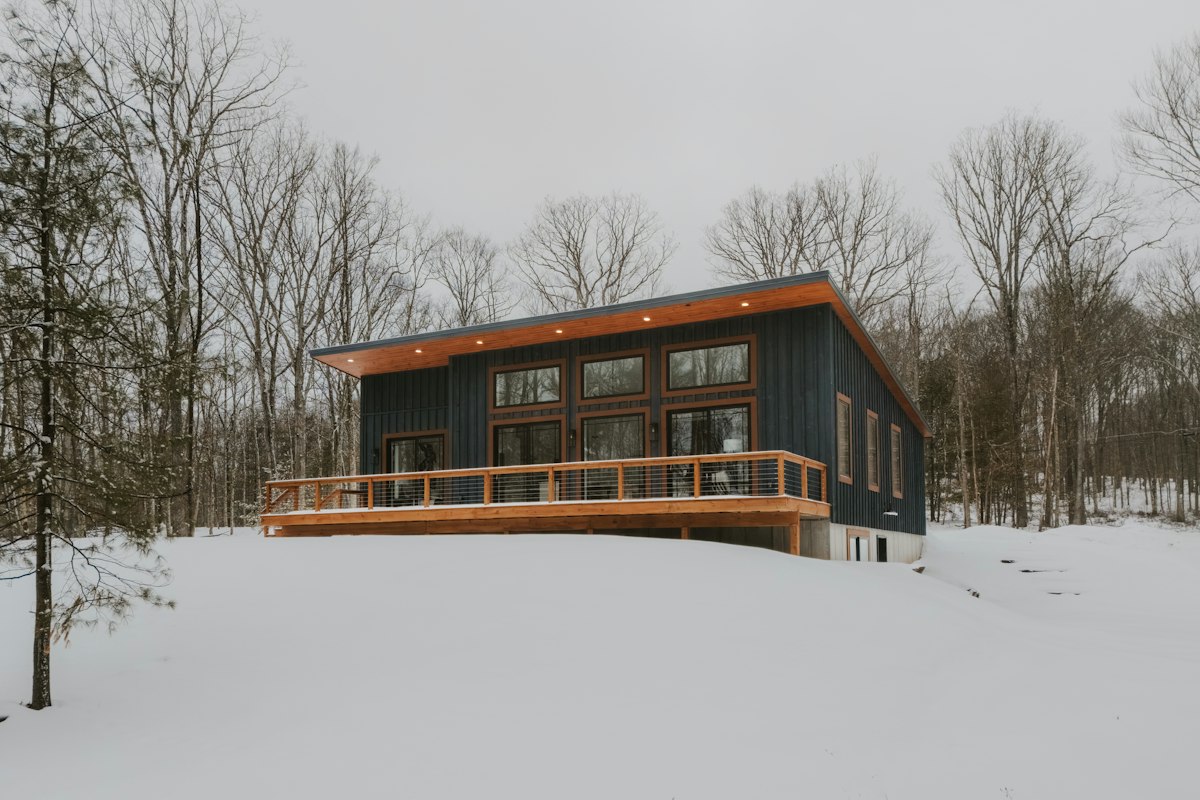
Can You Build Through a Spokane Winter? What Happens on the Jobsite From November to March
Every fall, someone asks us the same question: can you actually build through a Spokane winter, or does the crew just disappear until March? The honest answer is that we build through it — but the schedule has to account for it from the first day, not react to it in January. Here is what actually happens on a Johnson Brothers jobsite between November and March, and why a realistic 9–14 month timeline already has the season built in.
Frozen ground changes the order of operations
Excavation and foundation work want warm, workable soil. Once the ground freezes, digging footings gets slower and less predictable, so we push hard to have the foundation poured and backfilled before the first hard freeze. If a lot's timeline lands us in the shoulder season, we adjust sequencing — sometimes moving site utility work or grading earlier — rather than fighting frozen ground with a foundation crew standing around.
Concrete still cures in the cold — it just needs help
Concrete poured in freezing temperatures isn't a gamble if it's handled correctly: insulated blankets, temporary heat, and curing time that accounts for slower chemistry in cold weather. We plan for that extra time in the schedule instead of assuming a summer cure rate. It's one of the reasons we won't quote a Spokane build faster than 9–14 months — a honest schedule has winter concrete built into it, not hoped around.
Getting the roof on before the snow flies
Framing and roof-on are the milestones we watch closest heading into November. Once a house is framed, sheathed, and roofed, the interior work — electrical, plumbing, insulation, drywall — can proceed through a Spokane winter largely unaffected by what's happening outside. That's why our sequencing front-loads exterior work: the goal is a dried-in shell before the season turns, so the crews doing finish work in January aren't racing weather.
What actually slows down, and what doesn't
Exterior work — siding, some masonry, exterior paint — can slow in a hard cold snap. Interior trades generally don't care what it's doing outside once the building is enclosed and has temporary heat. Union journeyman crews who've worked Inland Northwest winters before know which tasks to sequence around weather and which ones just carry on. That experience is worth more on a January jobsite than any piece of equipment.
Why we tell you this before you sign, not after
In Washington, anyone can call themselves a builder, and a schedule that ignores winter is an easy way to look fast on paper and then explain a delay later. We'd rather walk a family through what November through March actually looks like on their specific lot and design — grading, foundation timing, when we expect to be roofed in — before groundbreaking, so nothing about the season surprises anyone once the crews are on site.
If you're planning a custom home and want a realistic look at how a Spokane winter fits into your timeline, we're happy to walk through it. Schedule a consultation with Clay or George, or see the process in more detail on our build process page.